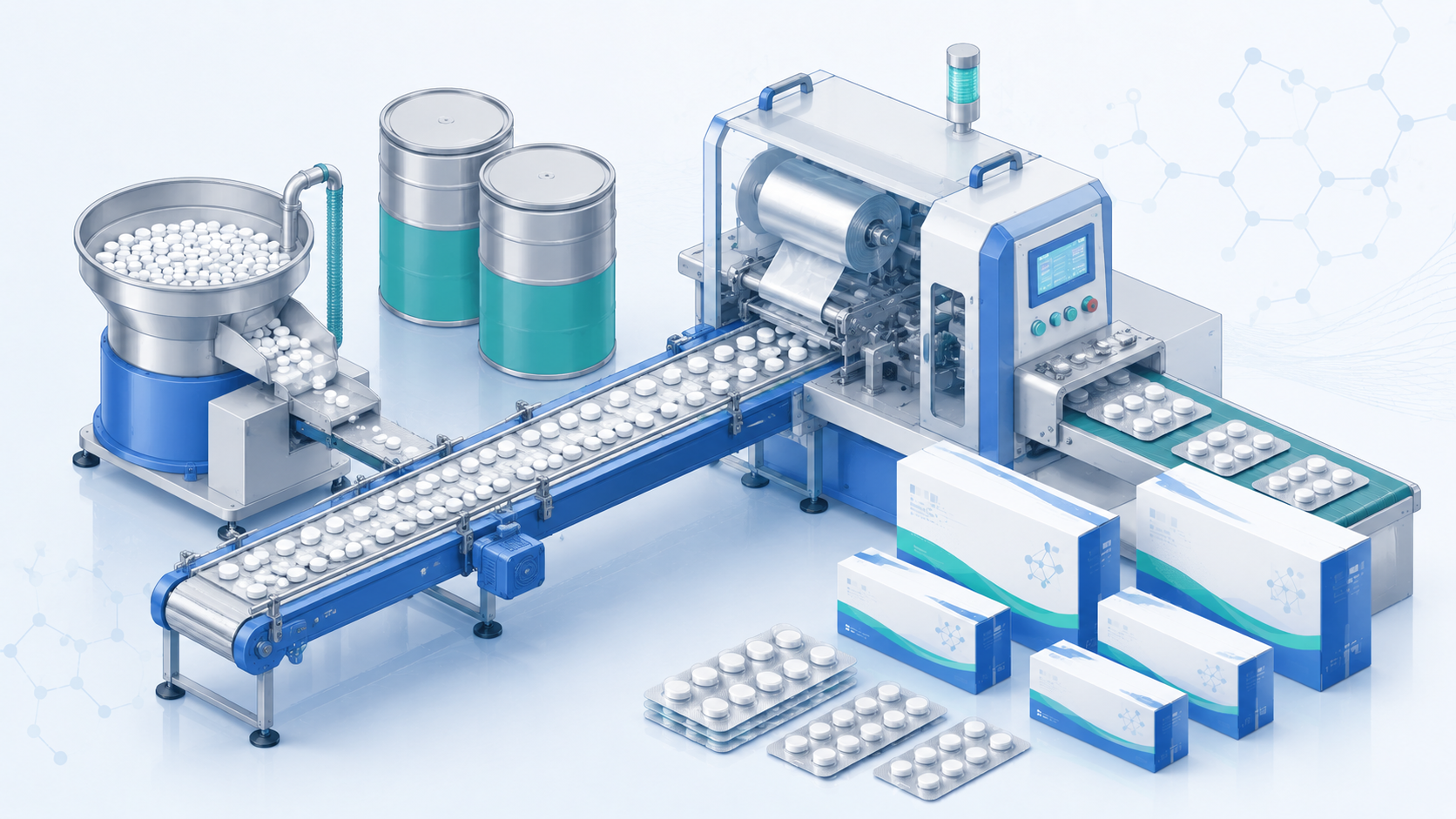
Tablet third-party manufacturing lets you launch your own branded tablet range without owning a plant, buying machinery or holding a manufacturing licence. You supply the brand, composition and packaging design; a certified manufacturer formulates, compresses, coats, packs and supplies the finished tablets to your specifications. For distributors, marketing companies, PCD franchise owners and entrepreneurs in India, it is the fastest, lowest-risk way to build a tablet portfolio. This guide explains the production process, tablet types, MOQ, packaging options, documents, lead times and how to get an accurate quote.
Key takeaways (TL;DR)
- Tablet contract manufacturing = your brand, the manufacturer’s certified facility, machines and quality systems.
- You can get uncoated, film-coated, enteric-coated, sustained/extended-release, chewable and dispersible tablets made.
- The two essentials to begin are a Drug License and a GST registration (plus your brand/trademark details).
- MOQ is usually quoted per batch and varies by composition and packaging; larger batches cut the per-tablet rate.
- Price depends on the molecule, tablet type, batch size, packaging (blister, strip or bottle) and quality specs.
What is tablet third-party manufacturing?
Tablet third-party manufacturing — also called contract or loan-licence tablet manufacturing — is an arrangement where you get your tablets produced by a separate, licensed manufacturer instead of running your own tablet section. You provide the brand name, the composition list and the packaging artwork; the manufacturer handles granulation, compression, coating, quality control and packing at a WHO-GMP certified facility.
Tablets are the most common oral solid dosage form across cardiology, diabetology, antibiotics, gastro, ortho and general ranges, which makes them the natural starting point for most new pharma brands. The model is ideal for marketing companies, PCD franchise partners and entrepreneurs who want a branded tablet range without the capital, licensing and compliance burden of owning a plant.
The tablet manufacturing process, step by step
From your first enquiry to dispatch, a typical tablet third-party order moves through these stages:
| Step | What happens | Indicative lead time |
|---|---|---|
| 1. Enquiry & product selection | Share required compositions, tablet types and quantities. | 1–2 days |
| 2. Quotation & MOQ | Manufacturer shares net rates, MOQ per product and timelines. | 2–4 days |
| 3. Documentation | Submit Drug License, GST and brand/trademark details. | 2–5 days |
| 4. Packaging & artwork | Approve blister/strip/bottle design, foils, labels and cartons. | 5–10 days |
| 5. Granulation & compression | Blending, granulation and tablet compression at the certified facility. | Part of batch cycle |
| 6. Coating (if applicable) | Film, enteric or sugar coating applied per the tablet type. | Part of batch cycle |
| 7. Quality control & testing | In-process and finished-product QC, batch and stability checks. | Part of batch cycle |
| 8. Packing & dispatch | Tablets blistered/strip-packed/bottled, cartoned and shipped. | Within agreed batch lead time |
Overall, a fresh tablet order commonly takes around 4–6 weeks from confirmed artwork and documents to dispatch, depending on the molecule, batch size and packaging. Lead times are indicative — confirm exact timelines for your products.
Types of tablets you can get manufactured
- Uncoated (plain) tablets: the simplest, most economical compressed tablets.
- Film-coated tablets: a thin polymer coat for appearance, taste-masking and easier swallowing.
- Enteric-coated tablets: coated to resist stomach acid and release in the intestine.
- Sustained / extended-release (SR/ER) tablets: formulated for gradual release over time.
- Chewable tablets: designed to be chewed, common in pediatric and supplement ranges.
- Dispersible / mouth-dissolving tablets: disperse in water or the mouth for easy intake.
- Bilayer and combination tablets: two layers or fixed-dose combinations in one tablet.
MOQ and packaging options
For tablets, the minimum order quantity is normally quoted per batch rather than per loose strip. MOQ varies with the composition, tablet type and chosen packaging — specialised coatings or formats can carry higher minimums. Larger batches lower the per-tablet rate, so order planning matters. Common tablet packaging formats include:
| Packaging | Typical use | MOQ & cost note |
|---|---|---|
| Blister pack (Alu–PVC) | Standard for most prescription and OTC tablets | Batch-level MOQ; widely used and economical |
| Alu–Alu blister | Moisture/light-sensitive molecules | Higher foil cost than Alu–PVC |
| Strip pack | Tablets and many general-range products | Batch-level MOQ; cost-efficient format |
| Bottle / container pack | Bulk counts, nutraceuticals, supplements | Adds bottle, cap, induction seal and label cost |
| Mono-carton & insert | Branding and regulatory leaflet | Adds carton and leaflet cost per pack |
MOQs and figures vary by product and manufacturer — always confirm the exact MOQ for each tablet and pack format.
What drives tablet manufacturing cost
| Factor | Effect on cost / order |
|---|---|
| Molecule / composition | Active ingredient cost varies widely by product |
| Tablet type | SR/ER, enteric and bilayer tablets cost more than plain uncoated |
| Batch size (MOQ) | Larger batches lower the per-tablet rate |
| Coating | Film, enteric or sugar coating adds material and process cost |
| Packaging | Alu–Alu, bottles, mono-cartons and inserts add cost over basic blister/strip |
| Quality & export specs | Higher or export-grade specs increase cost |
Documents required to start
- Drug License Number (wholesale or manufacturing, as applicable)
- GST registration
- Brand name & trademark (TM) details for your tablets
- FSSAI licence (for nutraceutical / food-supplement tablets)
- Product list with compositions, tablet types and packaging specifications
How to get an accurate tablet manufacturing quote
- Share full compositions: molecule, strength and tablet type for each product.
- State quantities: target batch size or annual volume per product.
- Specify packaging: blister, strip or bottle, plus carton and insert needs.
- Flag special needs: coating, export specs or moisture-sensitive packing.
- Confirm certifications: WHO-GMP, ISO, Schedule M and DCGI/FSSAI approval.
Kroyf Labs brings 16+ years of experience, 1350+ associates and a 400+ DCGI & FSSAI-approved product range, with WHO-GMP, ISO and FDA-standard manufacturing across tablets, capsules, softgels, syrups, injectables, eye drops and nutraceuticals — covering uncoated, film-coated, enteric, SR/ER, chewable and dispersible tablets with reliable pan-India supply from our Mumbai and Panchkula operations.
Ready to source your tablet range? Request a manufacturing quote from Kroyf Labs →
Frequently asked questions
What is tablet third-party manufacturing?
It is an arrangement where you get tablets made under your own brand by a separate licensed, certified manufacturer instead of producing them in-house. You own the brand; they handle granulation, compression, coating, quality control and packing.
What is the MOQ for tablet manufacturing?
Tablet MOQ is usually quoted per batch and depends on the composition, tablet type and packaging. Larger batches reduce the per-tablet cost. Confirm the exact MOQ for each product with the manufacturer.
Which types of tablets can be manufactured?
Uncoated (plain), film-coated, enteric-coated, sustained or extended-release (SR/ER), chewable, dispersible/mouth-dissolving, and bilayer or combination tablets can be manufactured on a third-party basis.
How long does a tablet manufacturing order take?
A fresh tablet order commonly takes around 4 to 6 weeks from confirmed artwork and documents to dispatch, depending on the molecule, batch size and packaging. Lead times are indicative; confirm exact timelines for your products.
What documents are needed to start?
A Drug License and GST registration are the essentials, plus your brand or trademark details. An FSSAI licence is required for nutraceutical and food-supplement tablets.
Author: Kroyf Labs Editorial Team — insights based on Kroyf Labs’ 16+ years in pharmaceutical manufacturing and PCD franchise across India. This article is general business information and not medical or legal advice. Figures are indicative; confirm exact terms with the manufacturer.