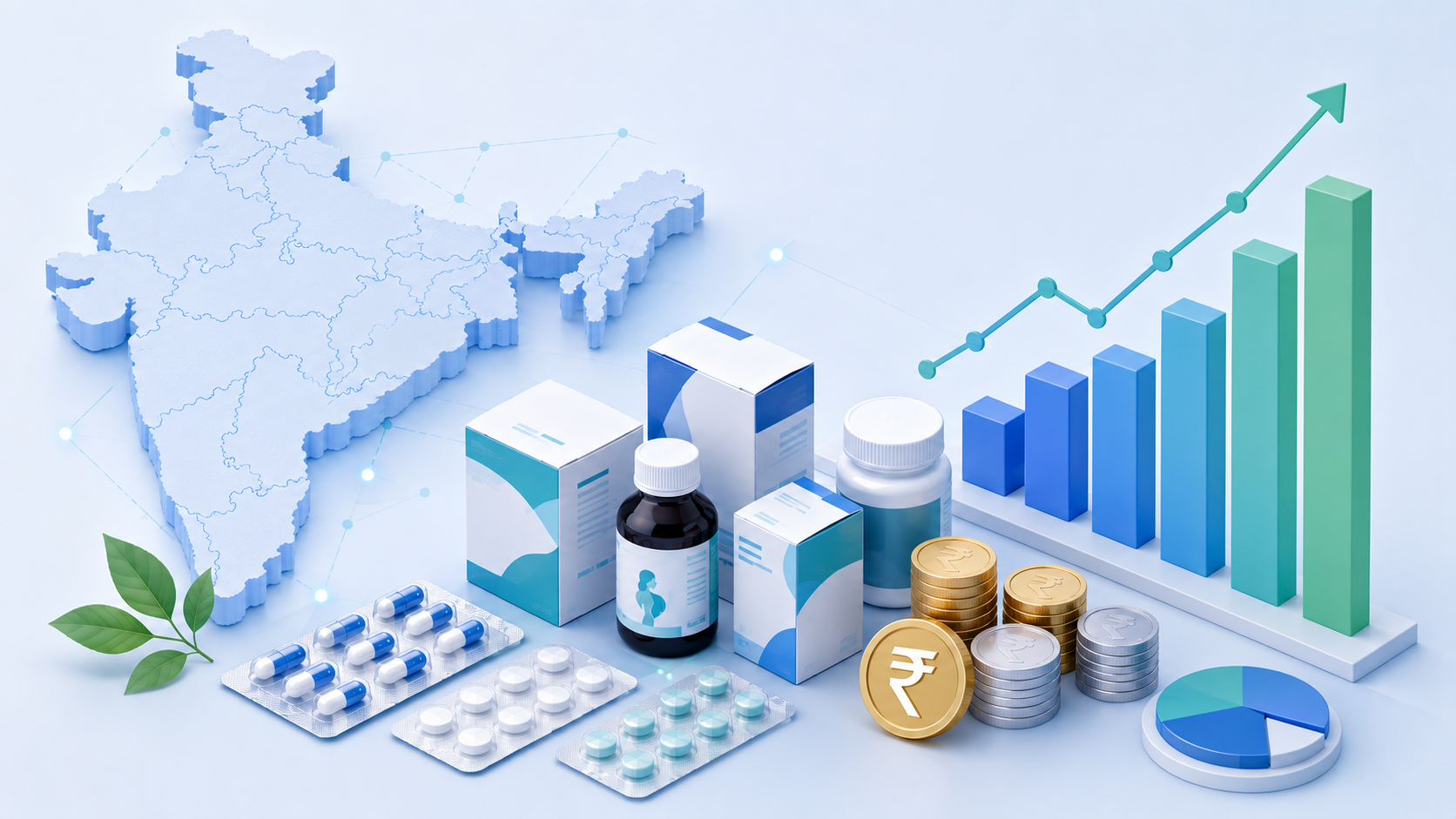
Thinking about starting a pharma business but unsure how much money you actually need? The PCD pharma franchise investment question is the first one every new entrepreneur asks — and the answer is usually far smaller than people expect. With a modest starting amount you can run a branded pharmaceutical distribution business in your own territory, on healthy margins. This guide breaks down exactly where your money goes, how pharma pricing (net rate, PTR, PTS and MRP) decides your profit, a worked margin example, and how to maximise your return.
Key takeaways (TL;DR)
- A single-territory PCD pharma franchise can typically start from ₹25,000 to ₹1,00,000; wider or multi-segment territories may need ₹1–2 lakh or more (indicative).
- Your investment mainly covers the first stock order, plus your own Drug License, GST registration and promotional inputs.
- Profit comes from the gap between your net rate (purchase price) and the PTR/PTS at which you sell — with margins commonly in the 20%–40%+ range.
- Understanding net rate, PTR, PTS and MRP is essential to calculate and protect your margin.
- Monopoly rights, the right product mix and volume are the biggest levers for return on investment (ROI).
How much investment does a PCD pharma franchise need?
A PCD (Propaganda Cum Distribution) pharma franchise is one of the lowest-capital ways to enter the pharmaceutical business in India. You are not building a factory or hiring a large team — you are buying branded, ready-to-sell products from a certified manufacturer at net rates and distributing them under monopoly rights in your area.
For a single territory with a focused product range, the starting investment is typically in the ₹25,000 to ₹1,00,000 band. If you want a wider territory, multiple therapeutic segments, or a larger opening stock, the figure can rise to ₹1–2 lakh or more. These figures are indicative — the exact amount depends on your product list, order size and the manufacturer’s terms, so always confirm before you commit.
PCD pharma franchise cost breakdown
It helps to see where the money actually goes. Below is an indicative breakdown of the typical cost components for starting a single-territory PCD franchise. Some of these are one-time legal/setup costs; others recur as you reorder stock.
| Cost component | Indicative amount | Notes |
|---|---|---|
| First stock order (opening inventory) | ₹20,000 – ₹80,000+ | Largest part of your investment; scales with product count and quantity |
| Drug License (wholesale) | ₹3,000 – ₹10,000 | One-time; obtained in your own name (consultant fees vary) |
| GST registration | Nil – ₹2,000 | Free on the GST portal; fee applies only if a consultant files it |
| Promotional inputs | ₹5,000 – ₹25,000 | Visiting cards, MR bags, sample/gift items, visual aids, brochures |
| Working capital buffer | ₹5,000 – ₹20,000 | For credit cycles and early operating expenses |
Figures are indicative and vary by state, product mix and manufacturer — confirm exact terms before you start.
Profit margins explained: net rate, PTR, PTS and MRP
To understand your profit, you first need to understand how pharma pricing is structured. Every product moves through a few standard price points, and your margin is the gap between them.
- Net rate: the price you, the franchise partner, pay the manufacturer for the product. This is your cost.
- PTR (Price to Retailer): the price at which the retailer/chemist buys the product from you.
- PTS (Price to Stockist): the price at which a stockist buys, when you sell through a stockist layer.
- MRP (Maximum Retail Price): the printed maximum price to the end customer; it anchors the whole margin structure.
Your profit is essentially (your selling price − your net rate). Because PCD products often carry a high MRP-to-net-rate gap, margins commonly fall in the 20% to 40%+ range — among the healthiest in any distribution business.
Example margin calculation
Here is a simplified, indicative example for a single product to show how the numbers work in practice. (Actual rates, MRP and margins vary by product.)
| Price point | Amount (per unit) | What it means |
|---|---|---|
| MRP | ₹100 | Printed maximum retail price |
| PTR (your selling price to chemist) | ₹70 | What the retailer pays you |
| Net rate (your purchase price) | ₹45 | What you pay the manufacturer |
| Your gross margin | ₹25 | PTR − net rate = ₹70 − ₹45 |
| Margin % | ~35.7% | ₹25 ÷ ₹70 of your sale value |
In this example you earn roughly ₹25 per unit. Sell 1,000 units in a month and that is about ₹25,000 gross margin from one product line — before subtracting your operating costs (transport, GST, promotional spend). Multiply across your product range and territory, and you can see how a small initial investment can generate a recurring return.
Factors that affect your profit margin
- Product mix: specialty segments (cardiology, dermatology, neurology) often carry higher margins than generic general-range products.
- Net rate negotiated: better net rates on bulk or repeat orders directly widen your margin.
- Order volume: larger purchase quantities usually lower your per-unit net rate.
- Promotional and scheme costs: bonus offers and free goods to retailers reduce effective margin if not managed.
- Credit and recovery: long credit cycles and unpaid dues eat into real profit.
- Monopoly rights: exclusive territory protects your pricing and prevents margin-eroding competition on the same brand.
How to maximise your ROI
- Secure monopoly rights in writing so no other partner sells the same brand in your area.
- Choose a focused, high-demand product range rather than spreading thin across too many SKUs.
- Negotiate net rates and order in efficient quantities to lower per-unit cost.
- Reinvest early profits into wider territory coverage and a deeper product list.
- Partner with a certified, reliable manufacturer — consistent quality and on-time supply protect both your brand and your repeat sales.
Kroyf Labs brings 16+ years of experience, 1350+ associates and a 400+ DCGI & FSSAI-approved product range across cardiology, dermatology, gastroenterology, orthopedics, diabetology, neurology and more — all backed by WHO-GMP, ISO and FDA-standard manufacturing with reliable pan-India supply from our Mumbai HQ and Panchkula operations. We offer monopoly-based PCD franchise opportunities on competitive net rates designed to give partners healthy, sustainable margins.
Ready to start with a low investment and strong margins? Enquire about a PCD franchise with Kroyf Labs →
Frequently asked questions
How much investment is needed to start a PCD pharma franchise?
A single-territory PCD pharma franchise typically starts from around ₹25,000 to ₹1,00,000, mainly covering your first stock order plus your Drug License, GST and promotional inputs. Wider territories or larger product ranges may need ₹1–2 lakh or more. These figures are indicative; confirm exact terms with the company.
What profit margin can I expect in a PCD pharma franchise?
Margins commonly range from about 20% to 40%+, depending on the product mix, your negotiated net rates and order volume. Specialty segments usually carry higher margins than general-range products. Your profit is the gap between your net rate (purchase price) and your selling price (PTR/PTS).
What do net rate, PTR, PTS and MRP mean?
Net rate is the price you pay the manufacturer. PTR (Price to Retailer) is what a chemist pays you. PTS (Price to Stockist) is what a stockist pays when you sell through that layer. MRP is the printed maximum retail price to the end customer, which anchors the whole margin structure.
What documents do I need to start a PCD franchise?
The two essentials are a wholesale Drug License and a GST registration, both in your own name. You may also need an FSSAI licence if you plan to handle nutraceutical or food-supplement products. Keep your address and basic KYC documents ready as well.
How can I maximise my return on investment?
Secure written monopoly rights for your territory, focus on a high-demand product range, negotiate good net rates, order in efficient quantities, and reinvest early profits to expand. Partnering with a certified, reliable manufacturer ensures consistent quality and supply, which protects repeat sales.
Author: Kroyf Labs Editorial Team — insights based on Kroyf Labs’ 16+ years in pharmaceutical manufacturing and PCD franchise across India. This article is general business information and not medical or legal advice. Figures are indicative; confirm exact terms with the company.