The ophthalmic segment is one of the most technically demanding areas of pharmaceutical manufacturing. Due to the sensitive nature of eye products, manufacturers must meet strict sterility, formulation, and regulatory standards. As demand for ophthalmic products continues to grow, eye drops third party manufacturing has become a preferred business model for pharma marketers, distributors, and healthcare suppliers.
This guide explains how third-party eye drops manufacturing works, why India is a leading hub, what quality standards matter most, and how to choose the right manufacturing partner.
What Is Eye Drops Third Party Manufacturing?
Eye drops third party manufacturing is a contract-based arrangement where a pharmaceutical company outsources the production of ophthalmic eye drops to a specialized manufacturer. The manufacturing partner handles formulation, sterile production, filling, packaging, and quality testing, while the brand owner focuses on marketing and distribution.
This model is widely used because ophthalmic manufacturing requires:
- Dedicated sterile facilities
- Specialized equipment
- Highly trained personnel
- Strict regulatory compliance
Outsourcing helps companies avoid heavy capital investment while still offering high-quality ophthalmic products.
Why India Is a Preferred Hub for Eye Drops Manufacturing
India has steadily emerged as a global center for ophthalmic manufacturing, particularly for sterile dosage forms such as eye drops. This leadership is the result of decades of investment in pharmaceutical infrastructure, regulatory alignment, and skilled technical manpower. For companies seeking eye drops third party manufacturing, India offers a rare combination of quality, scalability, and cost efficiency.
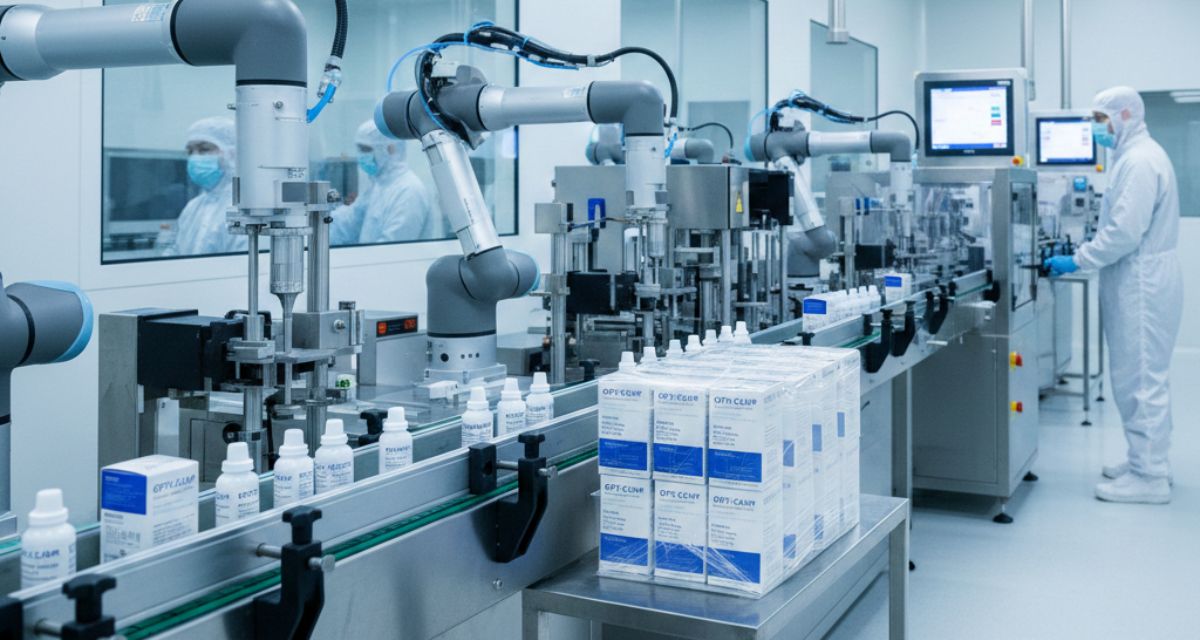
One of the key reasons international buyers prefer India is the widespread availability of WHO-GMP–compliant ophthalmic facilities. These facilities are designed specifically for sterile manufacturing, incorporating controlled cleanroom environments, validated aseptic processes, and rigorous microbial monitoring. Such infrastructure is essential for ophthalmic products, where even minimal contamination can compromise patient safety.
In addition, Indian manufacturers benefit from a mature supplier ecosystem that supports consistent access to high-quality raw materials, packaging components, and sterile containers. This supply-chain stability allows manufacturers to maintain batch-to-batch consistency, which is particularly important for long-term B2B partnerships.
Companies like Kroyf operate within this ecosystem by aligning manufacturing practices with both domestic and global ophthalmic standards. This positions India—and quality-focused Indian manufacturers—as reliable long-term partners for eye drops manufacturing across regulated and semi-regulated markets.
Key advantages include:
- WHO-GMP compliant manufacturing units
- Experienced ophthalmic formulation teams
- Competitive production costs
- Strong domestic and export supply chains
According to the World Health Organization, sterile pharmaceutical products such as ophthalmic solutions must meet stringent quality and contamination-control standards
(Source: https://www.who.int/teams/health-product-policy-and-standards).
Understanding the Ophthalmic Manufacturing Process
Eye drops manufacturing involves far more complexity than conventional oral formulations.
1. Formulation Development
The formulation must be precisely balanced for:
- pH
- Osmolarity
- Viscosity
- Preservative system (if applicable)
Even minor deviations can cause irritation or reduce product effectiveness.
2. Sterile Manufacturing Environment
Eye drops are manufactured in:
- Controlled cleanrooms
- Aseptic processing zones
- HEPA-filtered environments
The U.S. Pharmacopeia (USP) emphasizes aseptic processing and sterility assurance for ophthalmic preparations
(Source: https://www.usp.org).
3. Filtration & Filling
Sterile filtration is followed by aseptic filling into ophthalmic containers. This step is critical to prevent microbial contamination.
4. Packaging & Integrity Testing
ophthalmic manufacturing, quality begins long before the formulation enters the cleanroom. Raw material selection and packaging control are fundamental to ensuring the safety and stability of eye drops produced under third party manufacturing arrangements.
Active pharmaceutical ingredients (APIs), excipients, and water used in eye drop formulations must meet stringent pharmacopeial standards. Special attention is given to microbial limits, impurity profiles, and compatibility with ocular tissues. Even minor variability in raw materials can affect formulation clarity, pH balance, or shelf stability.
Packaging components—such as dropper bottles, caps, and seals—are equally important. Ophthalmic packaging must ensure dose accuracy, prevent contamination during use, and maintain integrity throughout the product’s shelf life. Compatibility studies are often conducted to confirm that packaging materials do not interact with the formulation.
Quality-driven manufacturers like Kroyf implement strict vendor qualification programs and incoming material testing to reduce variability. This disciplined approach to raw material and packaging control is particularly valuable for third party clients who depend on consistent quality across repeated production batches.
Why Quality Matters More in Eye Drops Manufacturing
Ophthalmic products are applied directly to the eye, making them one of the highest-risk dosage forms if quality is compromised.
High-quality eye drops manufacturing ensures:
- Patient safety
- Consistent dosing
- Reduced contamination risk
- Regulatory acceptance
Pharmaceutical companies with an ophthalmic focus, such as Kroyf, structure their manufacturing approach around controlled processes, validated systems, and compliance-driven quality checks rather than volume-focused production.
Regulatory & Compliance Requirements
Regulatory compliance is non-negotiable in ophthalmic manufacturing. Eye drops third party manufacturing must adhere to stringent national and international standards due to the high-risk nature of sterile ophthalmic products.
In India, ophthalmic manufacturing is regulated by the Central Drugs Standard Control Organization (CDSCO), which enforces Schedule M requirements related to sterile production, facility design, and quality management systems. Manufacturers must maintain comprehensive documentation covering raw materials, batch records, validation reports, and stability data.
For companies targeting export markets, additional compliance layers are often required. These may include market-specific documentation, stability studies under different climatic conditions, and adherence to importing country regulations. Regulatory readiness is therefore a key factor when selecting a manufacturing partner.
Quality-driven manufacturers such as Kroyf approach compliance as an ongoing process rather than a one-time certification. Regular audits, internal reviews, and continuous improvement practices help ensure sustained regulatory alignment, which is especially important for long-term third party manufacturing relationships.
Who Should Opt for Third Party Manufacturing of Eye Drops?
Eye drops third party manufacturing is ideal for:
- Pharma marketing companies
- PCD franchise operators
- Hospital suppliers
- Export-oriented businesses
It allows faster market entry without compromising on technical quality.
PCD Pharma Franchise Opportunities in Ophthalmics
Ophthalmic products are highly attractive for PCD franchises because:
- Demand is consistent
- Prescriptions are repeat-based
- Product ranges are expandable
Manufacturers like Kroyf support ophthalmic portfolios by maintaining product consistency and supply reliability—two factors critical for franchise success.
Export Potential of Ophthalmic Eye Drops
India exports ophthalmic products to:
- Africa
- Southeast Asia
- Middle East
- CIS countries
Export-ready manufacturers must meet:
- Stability study requirements
- Market-specific documentation
- Packaging and labeling regulations
Choosing the Right Eye Drops Manufacturing Partner
When selecting a third-party manufacturer, evaluate:
- Ophthalmic specialization
- Sterile facility design
- Quality assurance systems
- Documentation transparency
- Batch consistency
Manufacturers such as Kroyf that operate with a structured ophthalmic quality framework are better positioned for long-term partnerships.
Why Kroyf Fits into the Ophthalmic Manufacturing Ecosystem
Kroyf approaches ophthalmic manufacturing with a focus on:
- Sterility assurance
- Formulation stability
- Regulatory alignment
- Long-term supply consistency
Rather than treating eye drops as routine products, Kroyf aligns its processes with global ophthalmic manufacturing expectations, supporting both domestic and B2B requirements.
Common Questions on Eye Drops Manufacturing
Is ophthalmic manufacturing different from regular pharma manufacturing?
Yes. Ophthalmic products require sterile environments, aseptic processing, and strict contamination control.
Can eye drops be manufactured under third party agreements?
Yes. Many Indian manufacturers offer full third-party ophthalmic manufacturing services.
Why is sterility critical in eye drops?
Any contamination can cause serious eye irritation or infection.
Conclusion
Eye drops third party manufacturing offers a strategic pathway for pharma companies looking to enter or expand within the ophthalmic segment. With India’s strong regulatory ecosystem, technical expertise, and global acceptance, selecting the right manufacturing partner becomes the key differentiator.
Quality-driven manufacturers such as Kroyf demonstrate how structured ophthalmic processes, compliance focus, and manufacturing discipline support safe, reliable, and scalable eye care solutions.
1. What is eye drops third party manufacturing?
Eye drops third party manufacturing is a contract-based arrangement where a pharmaceutical company outsources the production of ophthalmic eye drops to a specialized manufacturer. The manufacturer handles formulation, sterile manufacturing, filling, packaging, and quality testing, while the brand owner focuses on marketing and distribution.
2. Why is third party manufacturing preferred for eye drops?
Ophthalmic products require sterile environments, aseptic processing, and strict quality controls. Third party manufacturing allows companies to access specialized ophthalmic facilities and expertise without investing heavily in infrastructure, making it a cost-effective and scalable option.
3. Why is sterility so important in eye drops manufacturing?
Eye drops are applied directly to the eye, making them highly sensitive to contamination. Even minimal microbial presence can cause irritation or infection. This is why ophthalmic manufacturing must follow stringent sterility standards, cleanroom controls, and aseptic filling processes.
4. What certifications should an eye drops manufacturer in India have?
A reliable eye drops third party manufacturer in India should comply with:
– WHO-GMP standards
– Schedule M requirements
– CDSCO regulations
These certifications indicate adherence to sterile manufacturing, quality management systems, and regulatory compliance.
5. Is India a good choice for eye drops third party manufacturing?
Yes. India is a preferred global hub for eye drops manufacturing due to its strong regulatory framework, availability of WHO-GMP compliant ophthalmic facilities, skilled technical workforce, and cost-effective production capabilities.
6. Can eye drops be manufactured for PCD pharma franchise companies?
Yes. Eye drops third party manufacturing is widely used by PCD pharma franchise companies. Ophthalmic products are well suited for franchise models due to consistent prescription demand and repeat usage across patient populations.
7. What types of eye drops can be manufactured through third party manufacturing?
Third party manufacturers can produce a wide range of ophthalmic products, including:
– Antibiotic eye drops
– Lubricating and dry eye drops
– Anti-allergic eye drops
– Combination ophthalmic formulations
10. Can eye drops manufactured in India be exported?
Yes. Many Indian manufacturers supply ophthalmic products to international markets. Export readiness depends on regulatory documentation, stability studies, and compliance with the importing country’s requirements.